
October 28, 2021
Improving customer satisfaction and creating a valuable customer experience is possible through the integration of multiple technological resources and a specialized human component. Here is the Increso proposal.
Always a central objective of a sound business strategy, customer satisfaction is now an indispensable asset to be achieved and consolidated, because of the changes brought about by the digital revolution: digital communication recognizes great power to customer satisfaction, through the system of reviews, feedback and to a truly amplified word-of-mouth.
Improving customer satisfaction, in fact, makes it possible to build a positive brand reputation, build customer loyalty and facilitate the acquisition of new customers.
There are multiple elements that play a key role in achieving customer satisfaction. While the quality of the product offered is essential, it is also crucial to build a valuable customer experience characterized by services that can enhance the proposed offer, constantly support the customer and nimbly adapt to his or her every need.
In fact, customer satisfaction is the end point of a strategic journey that the entire company undertakes, in all its processes and with all its resources.
Increso proposes 4 innovative tools for building a successful customer satisfaction strategy. Tools that enable the design of omnichannel and intuitive customer journeys especially in the pre- and post-sales phases, where peculiar and complex needs might emerge.
The goal is to reduce the customer's waiting time, ensuring not only an immediate response to their requests, but also and above all a full and effective understanding of their needs, thanks to the human support, always available, of operators capable of managing and interpreting the data collected from the digital touchpoints and the 4 technological resources we present below.
1. Omnichannel Journey
For some time now, customer service to be performant must be delivered through multiple channels of contact, but the still underdeveloped if crucial element is omnichannel.
An omnichannel service, in which customer interactions are integrated into a single interface, thus enables customer service to manage the Customer on the channel of their choice and fully meet the expectations of the end customer.
For this reason, we have built a highly configurable and scalable cloud platform that enables integrated and centralized management of contact channels, multiplying the touch points available to the customer.
How:
- WebApp
- Digital payments
- Social network
- Voice, email and SMS
- Chat and Chatbots
- Videostreaming
In particular, the voice channel and WebApps prove crucial in building intuitive and flexible journeys. In fact, the voice channel makes it possible to receive real time assistance in the most complex interactions; the WebApp, on the other hand, facilitates the self-care management of more time-consuming and repetitive processes, such as filling out, signing and authenticating contract documents.
Finally, through the use of push notifications, the customer is guided and fully supported in the satisfaction of every need, leading to a reduction in costs and service request processing time.
2. Smart Workflow
In order to provide maximum value to the customer, it is necessary to facilitate any switch between channels, with the aim of not only constantly improving the customer experience, but also anticipating the customer's requests.
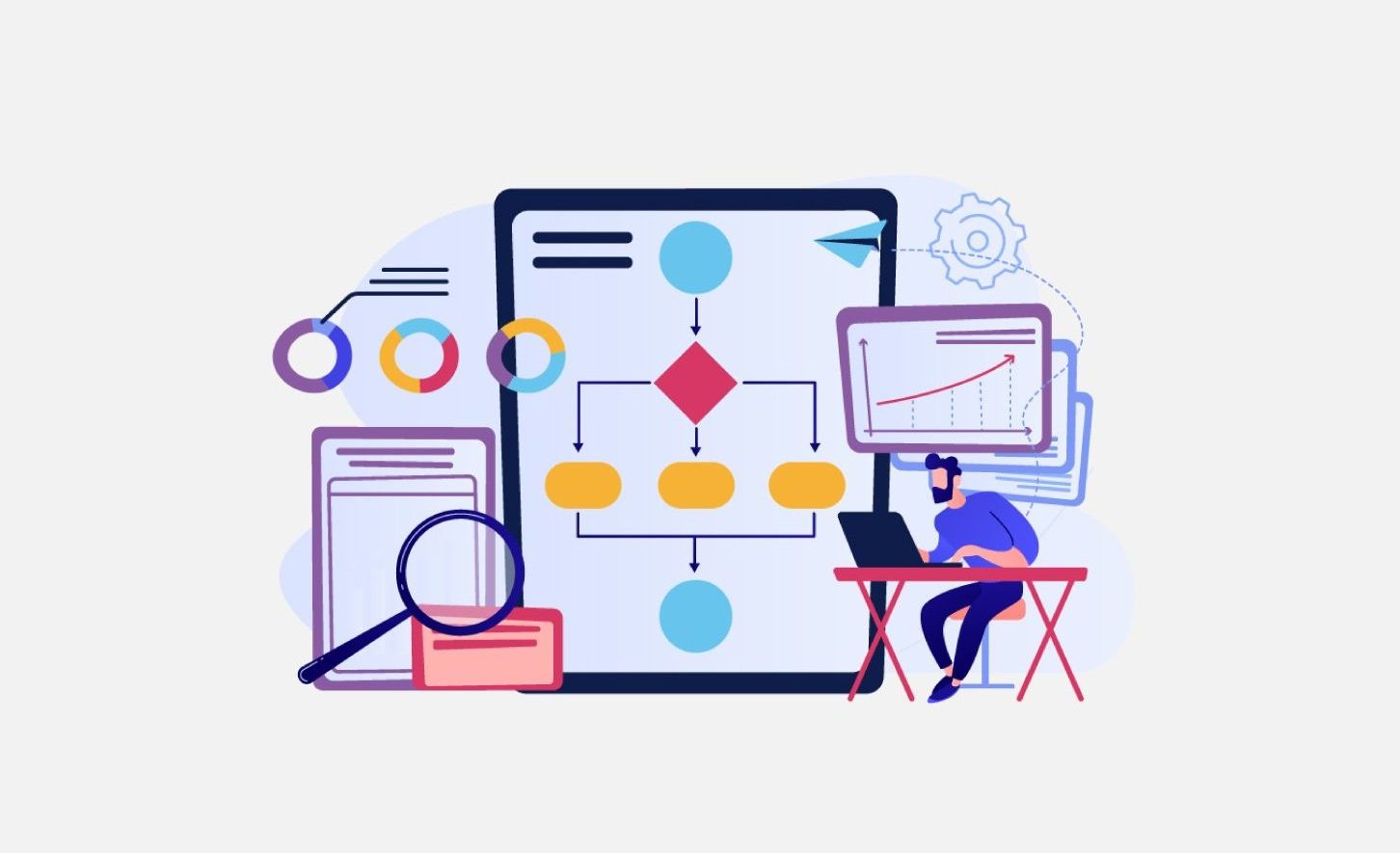
For this reason, thanks to a digital workflow management system we are able to monitor the response time, and any criticality of each channel, routing the request in realtime to the most suitable and performing channel.
If it is then necessary, the system automatically assigns the interaction to the most appropriate operator for the specific situation.
In fact, the digital workflow management system we have developed allows the entire service infrastructure to be managed automatically.

The system has the traditional flowcharting functionality to identify and track the reference workflow, to which, however, it integrates RPA components, such as control probes, that allow the performance of each system involved in service delivery to be measured, for example: the percentage of response delays, the extent of data processing blocks, etc.
Through the use of dedicated automata, webservices and integrated communication channels, the system is able to respond in real time to the information collected, constantly optimizing the process workflow.
3. Sentiment Analysis (AI)
To fully meet the customer's expectations, get to know the customer and build customer loyalty, it is essential to interpret the customer's state of mind.
If, for example, sentiment analysis identifies particular tension or nervousness, in the tone of voice or in the interaction via chat or chatbot (e.g., excessive use of capitalization), thanks to channel integration and "smart" workflow management, it is possible to automatically route the conversation to a dedicated operator, specific departments, or additional digital support channels.
Channels such as chatbots and webchats are, in fact, integrated with an NLP (Natural Language Processing) system for interpreting the user's intentions and mood. Strategically, this allows for:
- Interpreting the client's intentions, guiding them on the best solution path;
- identify critical situations that require escalation, immediately routing the interaction to the most appropriate operator to provide support.
4. Agent Analytics
The use of AI capabilities in both reference workflow processing and customer interaction provides a range of data and analytics that support:
- Team leader and supervisor in the evaluation and management of operators,
- bots and chatbots in the training phase of the algorithm for identifying requests.
Indeed, the workflow management solution that integrates all contact channels made available to the customer makes it possible to analyze the performance of customer journeys. This makes it possible to know and intervene on the critical and less satisfactory points for the customer, with a view to self-improvement, which is also essential from an organizational point of view in times of remote and smart working.
Flexibility and modularity of organizational and technological tools deployed by companies, therefore, are the key to achieving solid customer satisfaction. A worthwhile customer experience, in fact, is built first and foremost "with the customer" and through the analysis of his demands and needs. To do this best, it is necessary to put technological innovation at the service of human expertise, transforming sometimes lengthy and complex processes into distinctive success factors. Without forgetting the importance of the approach, which must be devoted to the simplicity of proposals and the analysis of all processes, avoiding standard solutions that are not lowered to the specific reality of the individual context.
Experience and innovation at your service

Contact us to define together a strategy tailored to your business. And your customers'.