
October 28, 2021
Digital Transformation involves the Healthcare sector, offering a wide range of medical apps. Technological solutions that promise a marked improvement in patients' quality of life and a simplification of physicians' work.
But what role can these innovations play within the healthcare system?
Our analysis from the perspective of patients and medical staff.
Online interest in health-related issues is high. In order to provide increasingly effective responses to this growing attention, there is a proliferation on the web of healthcare-oriented sites and new medical apps, technological solutions that can help protect one's health. Improving not only daily practices but also the relationship with the treating physician and the work of the healthcare system.
Doctors and patients approach digital healthcare in different ways. From the data, some interesting aspects emerge, let's read them together.
Digital health: the habits of patients
There are multiple medical apps available in the app stores. Different technological solutions that address specific needs.
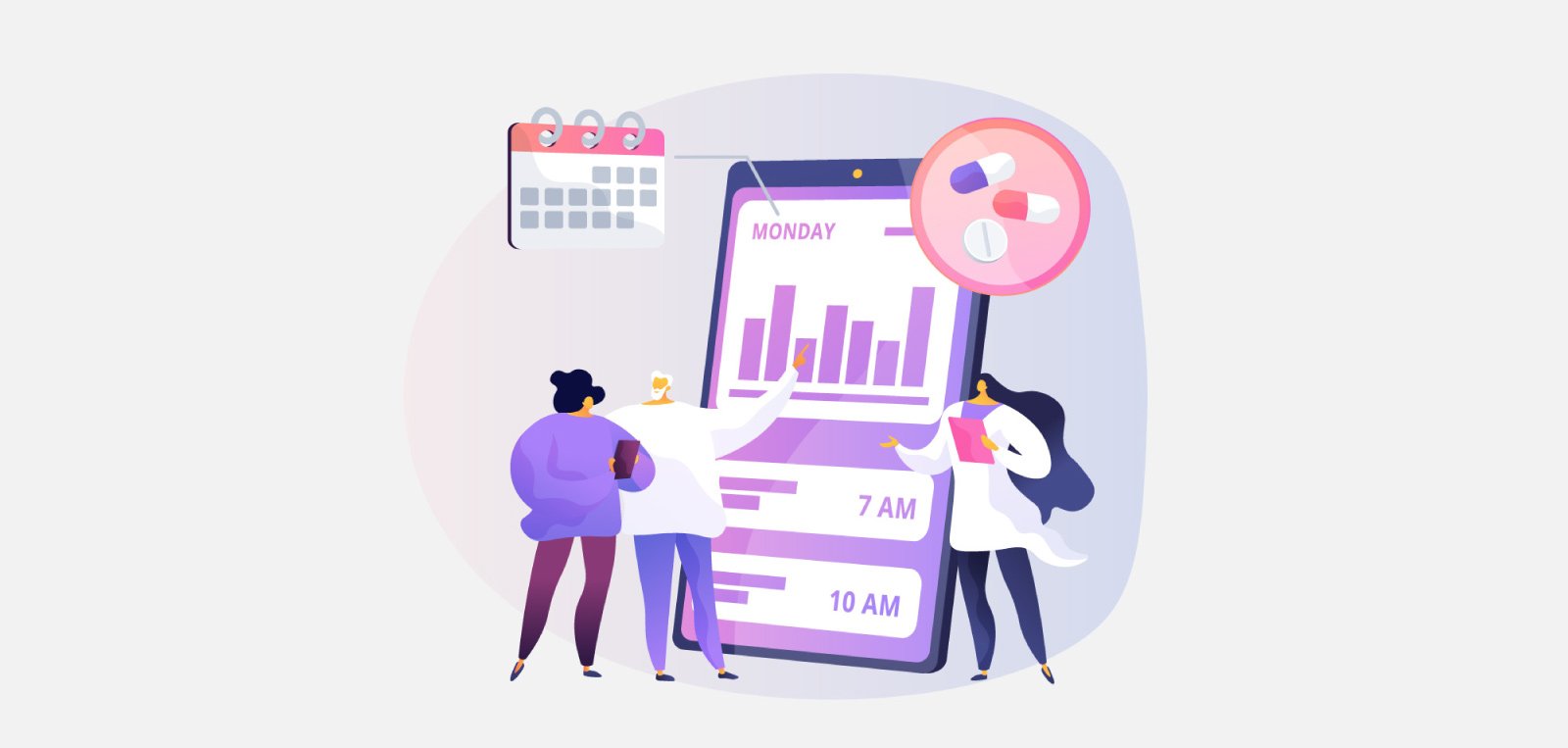
Designed for mobile, they interact with apps and features already on the device (calendar, clock, GPS, Bluetooth) and offer, for example, assistance with therapy scheduling, motor activity tracking, communication, and biometric data storage.
From the most common apps for runners to the most innovative apps for diabetics-which connect to the glucometer and help keep a history of blood glucose levels, sending real-time alerts if necessary-the range of solutions developed is really wide, as are the benefits offered.
What are the most downloaded apps? Here are the data from Polimi
Yet data collected from a recent study by the Milan Polytechnic tell us that Italians' interest in these apps does not exceed 40 percent, and the frequency of use in no case reaches the 30 percent threshold.
The most frequently used apps are those for training mental skills (28 percent), followed by apps for optimizing physical activity (23 percent) and those that help set up a healthy diet (14 percent).
These are user-friendly apps, not designed for specific therapeutic purposes. Conversely, apps designed to support the patient in the care pathway (useful for transmitting data to treating physicians, scheduling drug therapy, etc.) register much lower usage in the statistical sample, stopping at a maximum of 6 percent.
It turns out, moreover, that only 5 percent of respondents used apps to communicate directly with their primary care physician: perhaps the most valuable and strategic function that Digital Healthcare can offer, in terms of optimizing the doctor-patient relationship, patient management and simplifying clinical workflow.
In contrast, online content on medical topics registers greater interest. It is intuitive to understand why: in the face of minimal interaction and extreme immediacy and freedom of search, these pages allow the user to receive a quick answer to doubts and anxieties about their health status.
The risk of this trend is self-diagnosis, an understandable and widespread temptation that worries physicians and practitioners. Especially fearful of this drift are primary care physicians, who are at the forefront of patient relations and diagnostic practice.
Digital innovation in health care: the physicians' point of view
The Milan Polytechnic study indicates that physicians' opinion of patients' habits with respect to digital healthcare is cautious, especially when it comes to the risks associated with self-diagnosis.
Regarding the use of apps, however, it appears that it is mainly specialists who would like to see an increase in their use: particularly for the communication of clinical parametrics (51 percent) and for constant support to the therapy administered (48 percent).
This highlights how apps and platforms represent a paradigm shift in therapeutic relationship building. For physicians, an opportunity to streamline paperwork, improve data management and analysis, and have more time to devote to their patients.
Digital healthcare: consolidating virtuous practices

It is clear that the development of Digital Healthcare is an essential resource for improving the overall care pathway and optimizing the management of healthcare systems.
Technological solutions enable a virtuous interaction between technological and human components, which can not only simplify the work of physicians, but can also promote proper adherence to treatment and real-time monitoring of patients' conditions. They also foster the perception of greater psychological closeness of one's physician and the health care system, positively-and sometimes decisively-influencing the course of treatment.
They develop, therefore, the full potential of telemedicine.
Potential, which in order to be expressed in its entirety, needs a new service model, capable of enabling constant interaction between doctor and patient, transforming the data collected by apps into information that can be easily understood by the user and safely shared with their doctor.
Such a service model should make multiple touchpoints available to patients converging on a single platform, thereby optimizing the workflow of the health system.
In fact, a more streamlined service that integrates AI components with the care of skilled workers means more safety and health for patients.
The introduction of multiple contact channels (SMS, progressive web app, cloud IVR), the use of IoT health device management platforms, and the constant support of dedicated "Medical Assistant" operators are crucial tools for us in creating a fluid and personalized care experience, focused on the needs of the individual patient and not only on the delivery and monitoring of care. At Increso, for example, we are actively working on the development of services that can support healthcare facilities in their relationships with patients, at every stage of the treatment pathway: from medical history screening to the end of treatment administration.
Experience and innovation at your service

Contact us to define together a strategy tailored to your business. And your customers'.