
August 15, 2018
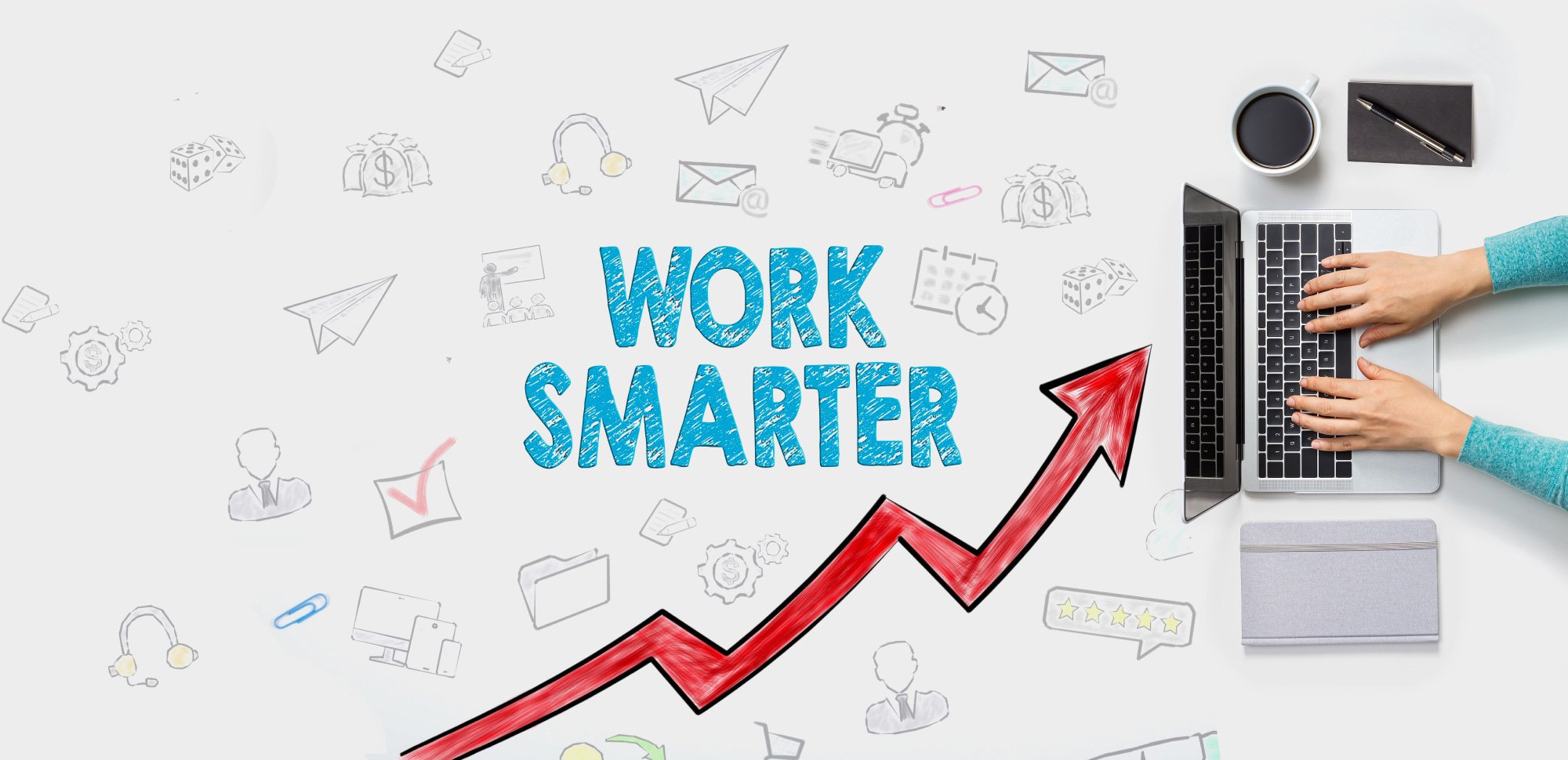
These days we are experiencing an entirely unprecedented global emergency: the coronavirus. A dramatic historical passage, but also an opportunity to stop and reflect on the customs and structures of our society. More and more people, for example, are discovering and appreciating the benefits of Smart Working, which have an impact both on everyone's daily life and on business performance. But what does it mean to work smart? And what do businesses need to do smart working?
How digitization changes work
Digital transformation is producing a momentous revolution in the world of work by changing its approaches, tasks and required skills. It is a transformation that, if managed correctly, highlights multiple benefits but requires a change of mindset shared by all stakeholders: schools, workers, companies and institutions.
Digital work can be done anywhere, anytime: this is the principle behind new forms of performance, such as smart working or telecommuting. And this very foundational aspect cannot but change the perspectives of work organization and culture, which conversely have traditionally developed on the close relationship between work performance and places and times of production.
Smart working is an important component of the digitization process, certainly among those with the greatest social impact: it can involve many categories of workers and is one of the elements that can most affect people's lives. However, it needs to be approached with an open mind, looking for new synergies between employers, employees and the companies themselves in an increasingly horizontal plan where cooperation is the distinguishing feature that allows the full potential of new technologies to be unleashed.
One should not stop at what has already been acquired. Some types of work, e.g., consulting, are "natively" smart since they are not strictly bound to working hours and locations. But other less flexible typologies, such as the call center, can also be rethought in an "agile" key, improving the daily routine and productivity of companies and workers, going so far as to ensure the very survival of the enterprise in critical conditions.
Smart Working, Win Win model: the Benefits for company, workers and country system
The benefits of smart working are well known by now, and current events are giving us more and more evidence of them: from the benefits on worker satisfaction, which is also linked to a 15 percent increase in productivity according to some estimates by the Smart Working Observatory of the Politecnico di Milano, to the positive impacts on the environment, to a reduction in structural costs for the company. However, during these weeks of forced conversion to smart work, additional benefits related to the adoption of smart working are also emerging such as:
- Ensuring business continuity even under critical and unpredictable conditions. A Smart Working facility does not stop; you can reduce the effort it is able to deliver but still keep running.
- Effectively manage peak workloads caused by sudden emergencies or seasonality of purchasing demands. Working smart makes it possible to harmonize the deployment of workers in relation to service needs and to make even settings where traditionally work with rigid turnover more flexible and productive.
- Enabling risk management in extreme situations, enabling their initial containment.
Multi-level benefits that benefit all involved, proof of how digitization can be a tremendous opportunity for the lives of all of us.
Smart working for smart business: the enabling factors
Technology is certainly the essential element that enables companies to practice smart working, but by itself it is not enough. The business organization and the very way in which the offering to be offered in the market is structured are equally important factors that indeed make digital tools truly useful and effective.
To do smart working is necessary:
- Have a business organization that is itself smart: operational models, which, in part through the widespread use of collaboration solutions, allow what normally happens in an open space to be reproduced virtually.
- Deliver scalable services in multichannel logic with selfcare capabilities, traceable to a control room that can even partially control their processing volumes and the channels used.
- Have the right tools for mobile work., cloud technologies, secure connections, and social mobile business platforms that can enable operators to work in a secure environment optimized for common task development.
What makes the difference, however, is always the people: having resources in your team capable of thinking outside the box and unreservedly adopting the new models is the real strategic asset that allows, along with the aspects highlighted, you to enjoy in a concrete and tangible way all the benefits that smart working produces.
Smart Working and the Increso experience, the advantage of a digital company
Telling these aspects in retrospect was easy because that is exactly the path we took in Increso during these critical weeks.
We have always worked with the understanding that we are moving in a digital ecosystem. And for that matter, when we have also been able to support our clients in the design and implementation phase of new services, we have always done so by setting our work according to the concepts highlighted in this article. This allowed us, in the face of the COVID-19 emergency, to convert all our operational teams to smart working within 2 days.
We have thus secured our resources, or at least avoided exposing them to the risks of contagion from daily close contact, allowing them to work with greater peace of mind, and at the same time we have ensured real business continuity for our clients, guaranteeing the delivery of commissioned services with normal levels of performance. A huge achievement for us, at times unimagined, that showed us once again the absolute importance and value of investing and training in digital.
Experience and innovation at your service

Contact us to define together a strategy tailored to your business. And your customers'.