
October 28, 2021
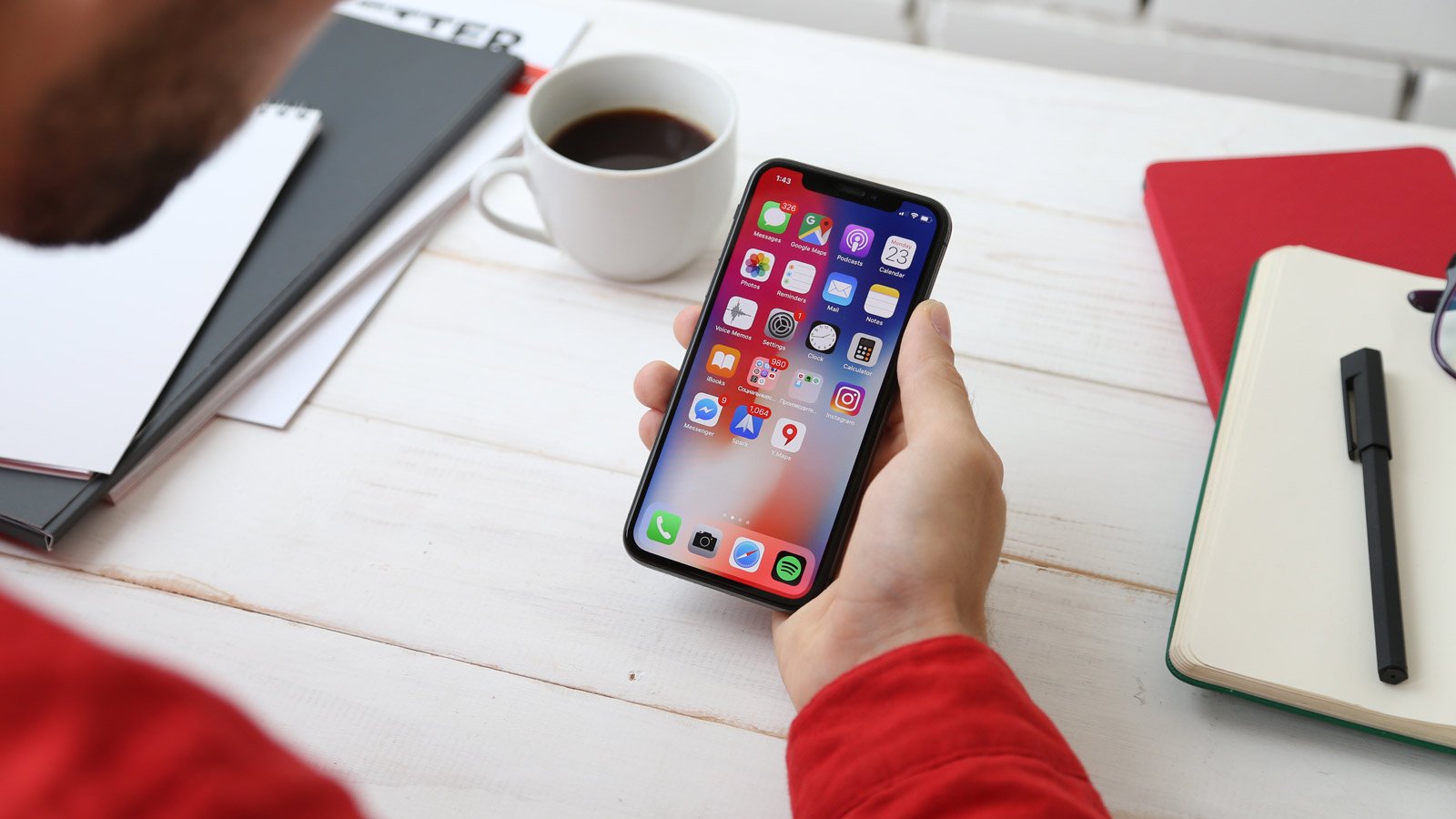
Mobile first: our everyday life is largely digital and increasingly developed through the smartphone, with fast and changing dynamics. A trend that the Covid-19 pandemic, has abruptly accentuated. An asset now essential for the development of successful customer journeys. Let's analyze the benefits of the latest industry trend: Progressive Web Apps.
If the user chooses the smartphone, businesses adapt. From an omnichannel perspective, more and more services are landing on mobile, redefining the rules of user experience design. After all, coexistence with Covid-19 has reshaped the boundaries between online and offline, projecting even the least digitized realities into an always - on omnichannel context, in which the typical customer journey is developed by alternating virtual and physical touchpoints, such as a store.
In this context, Apps have become key tools for designing flexible and customizable touchpoints, suitable for increasingly complex and multichannel real-time interactions. The goal is to create a customer experience that follows and adapts to the type of end consumer and their changing needs.
The latest trend is Progressive Web Apps, or PWAs.
Progressive Web Apps: what are they?
In the beginning were Native Apps, that is, the classic applications designed exclusively for mobile, downloadable from the various App stores. These are applications with a high degree of interaction with smartphones: they have access to device features and are customizable, but they take up memory and require a good connection to download and use, as well as, often, an updated operating system.
PWAs, Progressive Web Apps, on the other hand, are the latest vanguard and probably the future of App programming and customer experience (CX). Let's try to give a brief definition of them: they are a combination of a web page and an application, which does not require downloading from the App Store, with corresponding installation on the device to be used. They are therefore highly responsive websites that can interact with all the functions of the device in use and in fact, gradually transform into Apps, when used from mobile, according to the user's needs.
More and more are being developed and are becoming more and more advanced. All sectors are now turning to PWAs, which, after all, are rewarding the businesses that have already moved in this direction.

Progressive Web App - Some Known Examples
Uber
Parallel to the App, the company is focusing heavily on its PWA, which also allows access to the service from a browser on mobile. The reason is obvious: unlike the native App, which requires memory, good connection speed and specific system requirements to be installed, the PWA allows everyone to take advantage of Uber's "cab" service through browser-based access, even those who perhaps, own an old smartphone, or are in a situation of sudden need and do not have time to download and install a native app.
AliExpress
The Chinese e-commerce giant's data speaks for itself: converting its site to PWA has doubled the number of page views per session and multiplied the number of customers by double digits. This is because PWA enables a much more agile customer journey, and therefore increases the number of conversions. Imagine that a user clicks on a sponsored ad from AliExpress: he will be much more likely to conclude the purchase if he can do so with just a few clicks, without having to download an app that perhaps, as a rule, he does not consider necessary.
Many social networks are also landing on progressive web apps. Perhaps the most significant case is that of Pinterest. Prior to the launch of the Progressive Web App, the conversion rate-that is, users logging in from the browser or deciding to download the native app-was 1 percent. So the company decided to completely rewrite the website and, in just three months, turned it into a PWA, achieving a +40% increase in average time spent on the page; with a +44% increase in photos posted by users; and a +60% growth in engagement rate.
Progressive Web Apps vs. native APPs: which ones to choose?
There is no single answer to this question. Certainly both native APPs and PWAs have advantages and disadvantages. What really matters is the circumstance of service use: in other words, when, how and why a user needs to use a particular service. The user is always at the center, and it is the interface that must be customizable according to his or her needs in order to enable a fulfilling and worthwhile experience, thus relating to a successful customer journey.
A native APP still remains irreplaceable for all those daily uses with very high interaction with one's device, in which the user perceives the advantage-even psychological and emotional-of installing and owning the APP, since it enables strong personalization. Think, for example, of instant messaging apps or digital payment apps such as Paypal and SatisPay.
Conversely, for all those services that require precise interaction aimed at solving a single, specific need, PWAs are an excellent solution. They have lower costs and development time and, above all, allow to offer the user, both high responsiveness and integration with the device's functionalities. Think of all those cases in which one finds oneself using a service to obtain a certain output in a few seconds, such as tracking a delivery or quickly accessing documents and files to edit, compile, or archive.
To understand whether to develop a web app or conversely a native application, we must therefore first identify the target customer journey, along with the necessary degree of integration of the processes involved in it, to make navigation smoother and interaction more effective. This will allow us to develop the solutions that ensure optimal CX and successful performance.
So, Native App and PWA are both valid and effective applications, but this does not detract from the fact that PWAs have clear strategic advantages. Let's look at them.
The benefits of PWAs for the customer journey
Progressive Web Apps prepare an optimized and fast CX that makes users feel facilitated in their needs and free to access the service at any time. In other words, they offer a similar experience to native apps, but break down most of the barriers to use. They also bring the enormous advantage of ensuring the same customer experience on every channel, thus making omnichannel navigation extremely intuitive, increasing customer satisfaction. Which, translated, means increasing engagement.
For these reasons, progressive web apps are a truly essential solution for refining both post-sale and pre-sale customer care, enabling, for example, the customer to track a shipment, download or send documentation for the registration phase, or request assistance without having to make an APP download (or having anticipated the need for one in advance). This is a tangible benefit when one thinks of all those online sales services, which outsource shipping or customer care services to third parties. Arranging the ability to switch from one PWA to another in a single session proves to be a winning choice in such cases.
But PWAs are also essential tools for all those push interactions (payments, contract signings, loyalty activities, up/cross sale), for which it is even more relevant to be able to design touchpoints that are easily accessible by all types of users, since they are the ones who are being asked to perform crucial operations and it is therefore crucial to facilitate them as much as possible.
As anticipated, moreover, a major advantage for companies that choose to develop PWAs for mobile is the quick go live, thanks to the absence of app store validation processes and the low cost. As well as the ease of sharing between users: all it takes is the link, just like a regular web page.

For Progressive Web Apps to contribute to a successful customer journey, however, an integrated business strategy, developed from business analysis processes, must be implemented. CX and UI design do a lot, then, but they alone are not enough.
To achieve the desired results in relation to the effectiveness of interaction, it is essential to integrate the automation component of APPs with the human component capable of delivering care in an omnichannel mode. Current events once again help us understand the essentiality of this aspect: just think of how, during the Covid-19 emergency, it was essential for users to be able to take advantage simultaneously of both highly performing and responsive applications and the tangible and reassuring presence of human assistance.
An orientation that has always distinguishedIncreso's approach to C.R.M. "Create Memorable Relationships," which does not just develop individual applications or strategies but analyzes the processes involved, redesigning the entire customer journey and taking care of its implementation. Turnkey services supported by specific customer care teams.
Operators who can support and reassure him even in unexpected and particularly complex situations, where an app, web or native, is insufficient or does not exhaust his questions and perplexities.
Discover our solutions for integrating automation and human into your business CRM.
Contact us to define together a strategy tailored to your business. And of your customers.
Experience and innovation at your service

Contact us to define together a strategy tailored to your business. And your customers'.